Santa Barbara & Montecito
Santa Barbara Water History: Droughts, Dams and Tunnels
Historical background from Drought & Flood by Michael F. Hoover, PG, CHG.
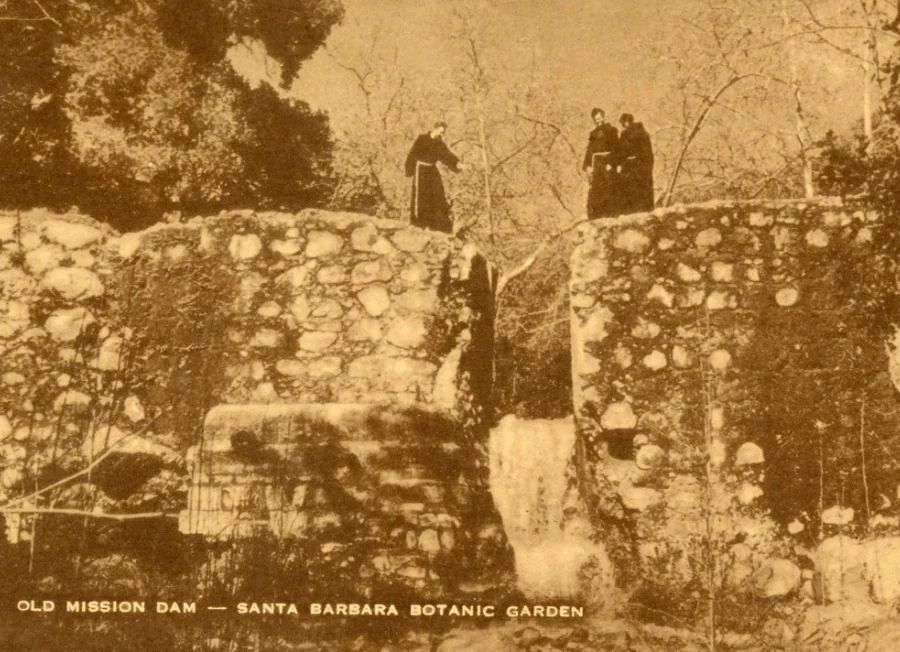
Stone aqueducts near Santa Barbara Mission mark an early chapter in the South Coast’s water history. Long before pipelines crossed the county, water diverted from Mission Creek supplied the Mission and the settlement below it. Parts of those works can still be seen today.
Supplying the coast with water has always required work. Most rain falls during a short winter season. Local streams diminish in summer, and prolonged drought can dry up the springs and creeks on which a growing population once depended.
Water from Mission Creek
In the early 1800s, water was carried from upper Mission Creek through stone aqueducts to the Mission. The Mission Canyon Dam, near the present-day botanical gardens, was built in 1806 using Chumash labor. Water diverted from the creek served the Mission and Santa Barbara into the early twentieth century.
These works made use of a nearby source and the slope of the land. As the town grew, however, the amount that could be taken from local streams and springs became a constraint. A supply sufficient for a small settlement could not keep pace indefinitely with new homes, farms, and businesses.
The years of “water famine”
Drought was familiar well before the large water projects were built. In 1862–1863, nearly all the region’s cattle died when virtually no rain fell for two years. By 1897, the demands of Santa Barbara’s growing population had produced what a local newspaper called a “water famine.”
In Drought & Flood, Michael F. Hoover describes droughts lasting from six to sixteen years within the rainfall record examined for the book. A succession of dry winters posed a different problem from an ordinary dry summer: a community needed water carried over from earlier years, or brought in from somewhere else.
Through the mountains
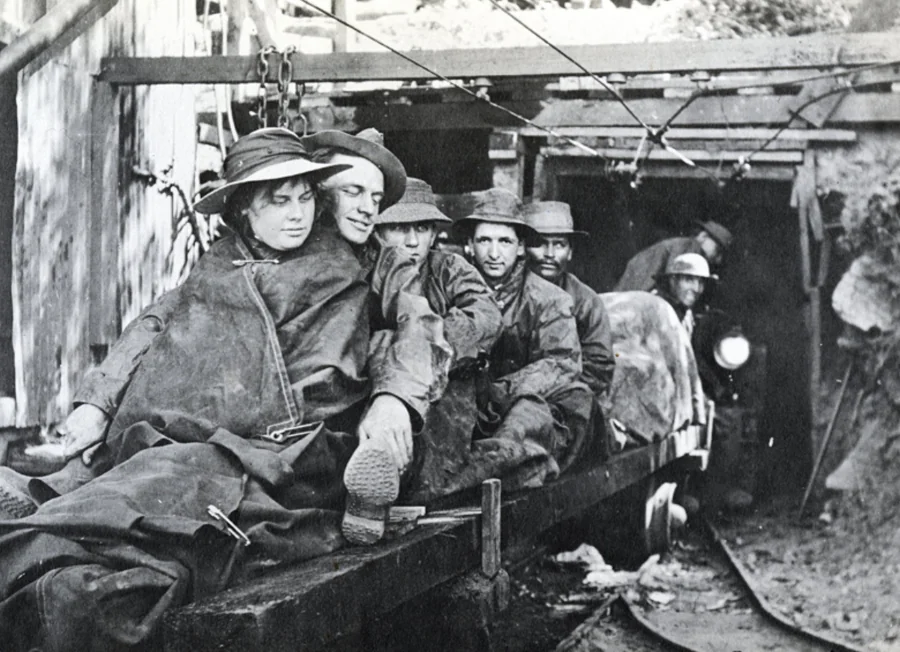
Beginning in 1897, Santa Barbara, Montecito, and private ranches began excavating tunnels in the mountains behind the coast. The work continued into the twentieth century, culminating in the completion of Tecolote Tunnel in 1958. Some tunnels extended for miles through solid rock.
A 1911 photograph shows workers and a Santa Barbara News Press photographer at the Mission Tunnel entrance. Behind them, the tunnel opened a route through the mountains to bring water to the coast.
Dams on the Santa Ynez River
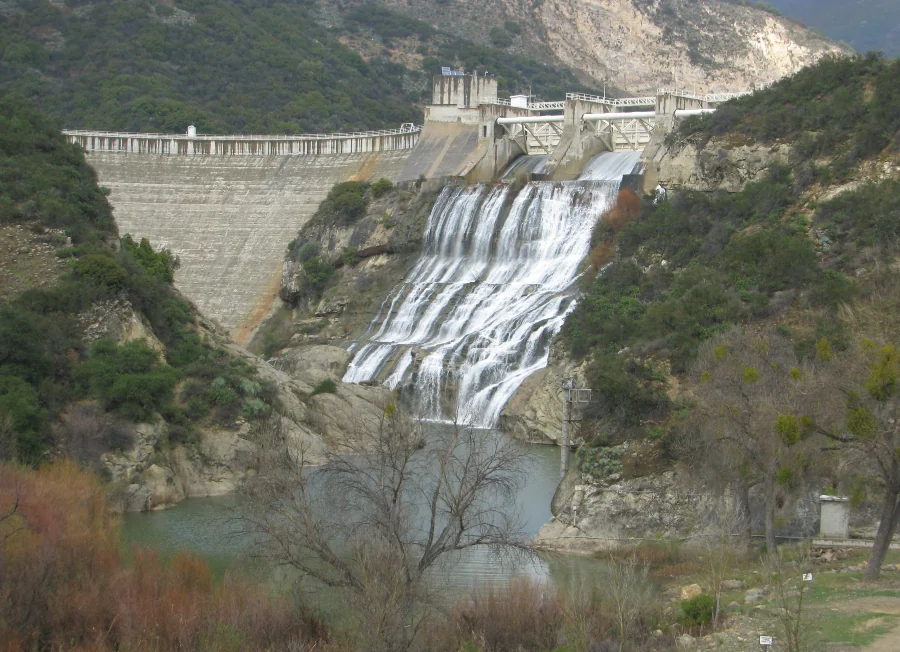
Once local sources could no longer meet demand, attention turned to the Santa Ynez River watershed on the inland side of the mountains. Gibraltar Dam, completed in 1919 in the book’s account, stored water that could be conveyed to the South Coast. Later, Lake Cachuma became another major source for coastal communities.
Capturing that water also brought conflict. Landowners downstream depended on the same river. Lawsuits over the diversions continued for decades, and questions about how much water should remain in the river persisted beyond the construction of the dams.
The consequences extended to fish. Bradbury Dam cut off steelhead access to upstream spawning grounds. Hoover’s account follows the efforts to maintain water in Hilton Creek, a small tributary near Lake Cachuma, as part of the work to protect the remaining steelhead population.
A supply from the sea
Dams, tunnels, wells, and imported water did not end the South Coast’s experience of shortage. Reservoirs remained vulnerable to drought. Moving water from distant watersheds brought legal and environmental obligations along with the engineering work.
Santa Barbara built a desalination plant in 1992. The book’s account describes its rebuilding in 2018 and the place of desalination in supplying the city and Montecito. Drawing on seawater added a source that did not depend on rainfall in the same way as creeks, wells, and reservoirs.
The Mission aqueducts, mountain tunnels, river dams, and desalination plant remain part of the same history. As demand grew, the South Coast reached farther for its water. Decisions about those supplies continue to affect both the communities receiving the water and the watersheds that provide it.
Read the full history
Drought & Flood follows the South Coast’s water history through drought, engineering projects, fire, and flood.
Order from UCSB Bookstore